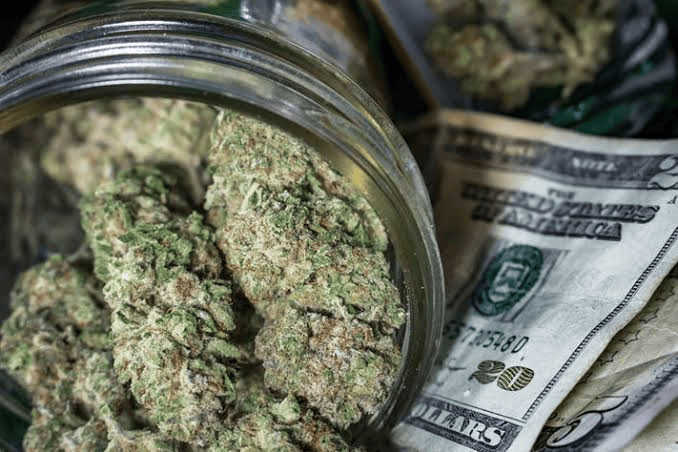
Wholesale cannabis pricing tells the truth about market health that retail prices conceal. When wholesale flower drops below $700 per pound for indoor and $300 per pound for outdoor, cultivators bleed. When concentrate wholesale crashes below $4 per gram, manufacturers shutter. Q1 2026 wholesale data shows a market still working through the oversupply that has defined cannabis since 2022, with some states finally showing price stabilization and others sliding further toward bankruptcy-level pricing.
This report covers Q1 2026 wholesale cannabis pricing across the major legal markets, what’s driving the trends, and what operators should expect through the rest of 2026.
National Wholesale Flower Pricing Snapshot
Wholesale flower pricing remains depressed across most legal markets. National averages for Q1 2026 — indoor flower trades between $850 and $1,400 per pound depending on quality tier, mixed-light (greenhouse) flower between $500 and $900 per pound, and outdoor flower between $200 and $500 per pound.
These averages hide enormous quality and state variation. Top-shelf indoor in mature markets like Colorado and Oregon clears $1,800 per pound for premium genetics. Bottom-shelf outdoor in oversupplied markets like Michigan and Oklahoma transacts as low as $150 per pound, often below the cost of trimming.
California — Stabilizing After Years of Decline
California wholesale flower bottomed in Q3 2024 at roughly $750 per pound for mid-shelf indoor. Q1 2026 pricing has recovered modestly, with mid-shelf indoor trading between $900 and $1,300 per pound and top-shelf reaching $1,800 to $2,400.
The recovery reflects supply contraction more than demand growth. Roughly 30% of California cultivation licenses went inactive between 2023 and 2025 as undercapitalized operators failed. Remaining cultivators are running tighter operations with better cost structures.
Outdoor and mixed-light pricing remains weak. Outdoor flower from Humboldt, Mendocino, and Trinity counties trades $200 to $400 per pound for the 2025 harvest, with sun-grown specialty product reaching $600 to $800. Most outdoor cultivators are unprofitable at these prices.
Colorado — Mature Market, Mature Pricing
Colorado wholesale flower trades between $700 and $1,300 per pound for indoor in Q1 2026, roughly flat year-over-year. The market hit equilibrium years ago and pricing now moves more with seasonal demand than supply disruptions.
Concentrate pricing in Colorado runs $3.50 to $8 per gram wholesale for distillate, $6 to $14 per gram for live resin, and $15 to $30 per gram for premium rosin. Manufacturers with strong genetics and brand partnerships maintain pricing power. Commodity distillate producers struggle.
Michigan — Continued Oversupply
Michigan remains the most oversupplied legal cannabis market. Wholesale flower averages $700 to $900 per pound for indoor mid-shelf in Q1 2026. Outdoor flower transacts as low as $150 per pound. Wholesale concentrate distillate trades at $2.50 to $4 per gram, below the cost structure of most manufacturers.
The oversupply traces to Michigan’s open licensing system — no statewide cap, generous canopy allowances, and a relatively small population to consume the production. Adult-use sales hit $3.1 billion in 2024 but supply outpaced even that volume.
Expect continued cultivator failures and consolidation through 2026. Operators surviving Michigan’s pricing environment have automation-heavy operations and below-$300-per-pound cost structures.
New York — High Prices, Distribution Bottlenecks
New York wholesale flower commands $2,400 to $3,800 per pound in Q1 2026, the highest prices in the legal market. Distribution to retail remains the constraint — limited dispensary count means cultivators can’t easily move volume despite strong demand.
Concentrate pricing follows flower upward, with distillate at $10 to $18 per gram and live rosin reaching $35 to $60 per gram wholesale. As more dispensaries open through 2026, prices will compress, but the supply-constrained dynamic suggests New York will sustain higher pricing than mature markets for at least another 18 months.
Massachusetts — Steady Decline
Massachusetts wholesale flower trades $1,400 to $2,200 per pound for indoor in Q1 2026, down from $2,500 to $3,400 in 2023. The state’s relatively mature market and growing cultivation capacity continue to pressure prices. Manufacturers and processors are seeing similar margin compression.
New Jersey and Connecticut — Mid-Cycle
New Jersey wholesale flower averages $1,800 to $2,800 per pound in Q1 2026, two years into adult-use sales. Connecticut runs slightly higher at $2,000 to $3,000. Both states will see prices decline through 2026 and 2027 as cultivation capacity continues to come online.
Ohio and Maryland — New Market Premium
Ohio launched adult-use in 2024 and Maryland in 2023. Both states show classic new-market wholesale pricing — Ohio at $2,500 to $3,500 per pound, Maryland at $2,200 to $3,200. Expect 20 to 35% price declines in both states through 2026 as supply ramps.
Concentrate and Manufacturing Wholesale
Distillate is the cannabis commodity that has crashed hardest. National wholesale averages for Q1 2026 — bulk distillate $2.50 to $6 per gram, live resin $5 to $14 per gram, rosin $12 to $30 per gram for solventless premium tier.
Vape cartridge wholesale pricing for finished goods runs $4 to $9 per cartridge for distillate-based products and $12 to $25 for live resin and rosin carts. Edible wholesale pricing remains relatively stable, with 100mg gummy packs at $3 to $7 wholesale across most states.
What’s Driving the Trends
Oversupply remains the dominant factor. Most legal states issued more cultivation capacity than their consumer demand could absorb, leading to multi-year corrections. States that capped cultivation tightly — New York, Illinois pre-Craft Grower expansion — maintain higher prices. Open-license states without caps — Michigan, Oklahoma, Oregon historically — experience the deepest pricing collapses.
Brand premium is becoming the differentiator. Top brands sustain wholesale pricing 30 to 80% above commodity tier even in oversupplied markets. Cultivators who built genetics libraries, IP-protected strains, and consumer recognition extract premium pricing. Commodity producers fight for survival.
Federal rescheduling discussions periodically move pricing speculation. Each round of optimism about rescheduling or banking reform pulls forward investment, increasing capacity and pressuring prices further. Operators planning for federal change should plan conservatively — current pricing reality is what businesses must operate within.
Operator Implications
Cultivators in oversupplied markets need cost structures below $400 per pound all-in to survive 2026. Achieving this requires automation, energy efficiency, scale, and disciplined operations. Operators above $600 per pound all-in are likely to struggle in any market that isn’t supply-constrained like New York.
Manufacturers face similar pressure. Distillate producers need sub-$2-per-gram production costs to maintain margin. Live resin and rosin producers can sustain higher cost structures if quality justifies brand premium.
Retailers benefit from low wholesale pricing in oversupplied markets — gross margins on flower have expanded as wholesale collapsed faster than retail. But retailers in mature markets face their own margin pressure from competition and customer price sensitivity.
Outlook Through 2026
Expect continued price recovery in California as supply contraction continues. Michigan likely faces another 12 to 18 months of weak pricing before consolidation tightens supply. New York prices will compress as dispensary count grows. New markets like Ohio, Maryland, and Minnesota will see normal new-market price declines.
Federal rescheduling, if it happens in 2026 or 2027, will pull more institutional capital into cannabis and increase competitive pressure on undercapitalized operators. Banking reform via SAFER would compress lending costs and enable more aggressive expansion.
For operators planning 2026 strategy, model pricing conservatively, focus on cost structure and brand differentiation, and avoid building capacity speculating on price recovery that may not arrive.
Browse cannabis cultivation suppliers, manufacturing equipment, and wholesale partners in the NextCanna Connect Cultivation & Growing directory and Manufacturers & Suppliers directory to source efficient operations partners.