Cannabis packaging is one of the most frequently cited compliance failures in regulatory audits. Penalties range from $500 per non-compliant unit in lighter states to $10,000 per violation plus product destruction in stricter jurisdictions. With packaging touching every product a cultivator, manufacturer, or retailer handles, getting compliance right is foundational. Yet packaging requirements vary so dramatically by state that operators expanding across jurisdictions routinely make expensive mistakes.
This guide covers child-resistant packaging requirements, labeling rules, sustainability mandates, and the most common packaging violations across the major US cannabis markets.
Why Child-Resistant Packaging Matters
Federal Consumer Product Safety Commission standards under the Poison Prevention Packaging Act of 1970 require child-resistant packaging for products that can harm children. While cannabis is federally illegal and therefore not directly covered by CPSC standards, states have adopted CPSC-equivalent standards through their cannabis regulatory programs.
The standard most states reference is ASTM D3475, which requires packaging that cannot be opened by 80% of children under five within 10 minutes, but can be opened by 90% of adults. Packaging must be tested by an accredited laboratory and certified before commercial use.
For cannabis specifically, all packaging containing THC products must be child-resistant on initial sale to consumers. Multi-use containers must be child-resistant after each reseal — a higher bar than single-use packaging.
California Packaging Requirements
California requires child-resistant packaging for all cannabis products at retail. Pre-rolls must be in child-resistant exit packaging if not individually packaged in CR containers. Edibles must be in CR packaging that remains CR through normal use.
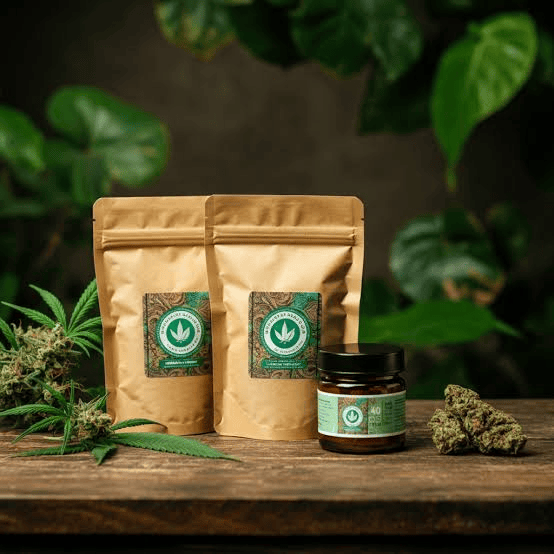
Labeling requirements are extensive. Required elements include the universal cannabis symbol (a green triangle with “!” and “THC” letters), THC and CBD content in milligrams per package and per serving, manufacturer name and license number, batch number, date of packaging, statement that the product contains cannabis, statement that the product is for use only by adults 21 and over, and government warnings about health effects.
Edibles must be packaged in opaque containers — transparent or translucent packaging is prohibited. Edibles must not be designed in shapes that appeal to children. Gummies cannot be in shapes resembling humans, animals, or fruits.
Vape cartridges must be packaged in CR boxes or blister packs with the universal symbol on each cart and on outer packaging.
Colorado Packaging Requirements
Colorado uses similar CR standards with state-specific labeling requirements. Required elements include Colorado’s universal symbol, batch number, product type, weight or volume, THC content, expiration date for edibles, list of ingredients, allergen warnings, statement that the product contains cannabis, and warnings about driving and pregnancy.
Colorado has aggressive enforcement on edible shapes — explicit prohibition on shapes that resemble animals, fruit, or cartoons. Penalties for shape violations include product destruction and license action.
New York Packaging Requirements
New York’s packaging rules are among the strictest in the country. Required elements include New York’s specific universal symbol, manufacturer information, batch and lot numbers, cannabinoid profile beyond just THC, terpene content for inhalable products, expiration or use-by date, country of origin for any imported components, and recyclability statement.
Packaging materials must meet sustainability requirements. New York prohibits PVC and polystyrene packaging entirely. Mylar bags must contain post-consumer recycled content of at least 25% by 2027.
Plain packaging requirements limit brand graphics and prohibit colors or images that would appeal to children. Bright colors, cartoon characters, fruit imagery for flower products, and copycat designs of mainstream snack brands are all prohibited.
Massachusetts and New Jersey
Massachusetts requires CR packaging with state-specific symbols and detailed labeling. New Jersey adopted similar requirements with additional restrictions on flavor descriptors for vape products — terms like “candy,” “dessert,” or fruit-specific names beyond basic strain descriptors are restricted.
Michigan and Illinois
Michigan’s Cannabis Regulatory Agency requires CR packaging with the state’s universal symbol and standard labeling. Edibles face shape restrictions similar to other states. Michigan permits some flexibility on packaging colors that other states prohibit.
Illinois requires CR packaging with detailed batch tracking labels. Illinois also requires that packaging include the dispensary name and license number, which means the retailer applies a final label at point of sale or the manufacturer customizes packaging by retailer — an operational complication that adds cost.
Common Packaging Violations
The most frequent compliance failure is missing or incorrectly applied universal symbols. Each state has its own symbol with specific size and placement requirements. Using California’s symbol on a product sold in Colorado is a violation. Symbol size below minimum specifications is a violation. Symbol obscured by other label elements is a violation.
THC content discrepancies between label and lab results cause major violations. State regulators compare label claims to Certificate of Analysis results, and discrepancies above the allowed variance (typically 10 to 20%) trigger violations. Manufacturers should test final packaged products, not just bulk material, to ensure label accuracy.
Edible shape violations destroy product. Operators creating gummies in any shape resembling humans, animals, or fruit face product destruction and potential license action. Geometric shapes — circles, squares, simple polygons — are universally accepted.
Allergen labeling failures in edibles trigger violations and consumer complaints. All major allergens must be disclosed, and “may contain” statements for shared-equipment manufacturing are required.
Color and graphic violations in stricter states (New York, Massachusetts) catch operators expanding from less strict states. What’s legal packaging in Michigan may be illegal in New York.
Vendor Options
Kush Bottles / KushCo — large national packaging supplier with cannabis-specific compliance certifications. Stock options across all major states. Pricing competitive at volume.
Calyx Containers — premium glass and plastic containers with CR certifications. Higher price point but strong brand presentation.
Custom Cones USA — pre-roll cones, tubes, and pre-roll packaging. Specialized in pre-roll category.
N2 Packaging — custom printed mylar bags and CR pouches. Lower minimum order quantities than competitors.
Sana Packaging — sustainable packaging using hemp plastic and reclaimed ocean plastic. Higher cost but addresses sustainability requirements.
For new operators, working with packaging consultants who specialize in cannabis compliance is worth the cost. Mistakes get expensive fast.
Sustainability Mandates
Sustainability requirements are tightening across states. California’s SB-54 extended producer responsibility requirements for cannabis packaging come into effect through 2026 and 2027. New York’s recycled content mandates ramp through 2027. Oregon and Washington have similar trajectories.
Operators should plan packaging procurement assuming sustainability requirements will continue to expand. Reusable, recyclable, and compostable packaging will be required across more states by 2028.
Implementation Recommendations
Audit current packaging against state requirements quarterly. Regulations change and one rule update can make existing inventory non-compliant. Maintain documentation of CR testing certifications from suppliers. Test packaged products for THC content match against label claims at least monthly. Train retail staff on packaging compliance to catch issues at the receiving stage rather than after stocking.
For multi-state operators, build state-specific packaging SKUs rather than trying to design universal packaging. The complexity of meeting every state’s requirements in one package design creates compliance risk and visual compromise.
Browse cannabis packaging suppliers and compliance consultants in the NextCanna Connect Marketing, Branding & Packaging directory to find vendors certified for your operating states.